Linguista Font Review: Charm for Logos and Invitations
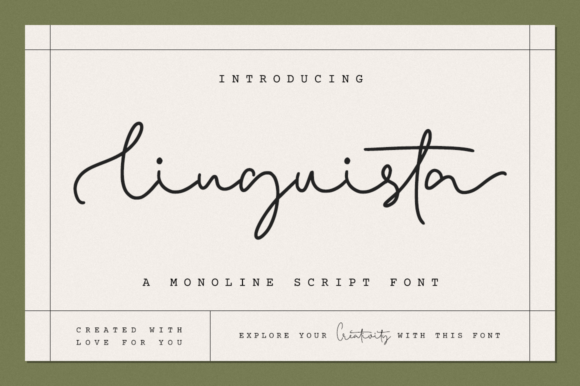
I was halfway through a brand board for a boutique skincare line last Tuesday, staring at a blank space where the logo needed to sit, when I decided to pull Linguista out of my folder. As a designer constantly hunting for that perfect balance between personality and polish, finding the right Script Handwritten typeface can feel like searching for a needle in a haystack. This specific set of Fonts immediately caught my eye because Linguista feels equally charming and elegant, offering a visual voice that is rare to find in standard libraries. It looks stunning on wedding invitations, thank you cards, quotes, greeting cards, logos, business cards and every other design which needs a handwritten touch without sacrificing legibility.
Testing Linguista for Logo Design and Brand Identity
When working with Linguista, Script Handwritten styles, and modern Fonts in a branding context, the first thing I look for is how the letters connect. In my recent project, I typed out the client's name using Linguista, and the flow was immediate. Unlike some decorative scripts that feel disjointed or overly swashed, this typeface maintains a natural rhythm that mimics genuine handwriting. For logo design, this is critical; you need a mark that feels bespoke but remains readable at various sizes. I tested it on a mockup for a shop sign, and the strokes held up beautifully, providing enough weight to be seen from a distance while retaining those delicate terminals that give it its elegant character. If you are building a brand identity for a bakery, a creative studio, or a handmade shop, Linguista offers that approachable yet premium feel that signals quality to potential customers.
Creating Elegant Wedding Invitations and Stationery
One of the strongest use cases I found while reviewing Linguista, along with other Script Handwritten options and premium Fonts, is in the realm of event stationery. The prompt mentions that it looks stunning on wedding invitations, thank you cards, quotes, greeting cards, logos, business cards and every other design which needs a handwritten aesthetic, and my testing confirmed this. I placed the font on a digital mockup of a folded invitation suite, pairing it with a clean sans serif for the details. The contrast was striking. Linguista brings a sense of occasion and warmth that rigid serif fonts often miss. Whether you are designing save-the-dates or menu cards, the charm of this typeface elevates the perceived value of the paper goods. It handles capital letters with grace, making it perfect for monograms or header text on greeting cards where you want to make a strong, emotional first impression.
Using Linguista in Packaging Design and Product Labels
Moving from paper to product, I wondered how Linguista, as a Script Handwritten choice among many Fonts, would perform on packaging. I applied it to a label design for a small-batch candle brand. The result was fantastic. The font's organic curves softened the rectangular shape of the label, creating a friendly and artisanal vibe. When you are designing product labels for cosmetics, food items, or craft goods, you need a typeface that suggests the product was made with care. Linguista delivers exactly that. It works exceptionally well as a display font on the front of a package, drawing the eye instantly. However, for the ingredient list or back-of-pack instructions, I would recommend switching to a simple sans serif or serif font to ensure readability at small sizes, as script fonts are best reserved for headlines and short phrases in these contexts.
Enhancing Social Media Graphics and Web Headers
In the digital space, Linguista, alongside other Script Handwritten tools and web-ready Fonts, shines when used for emphasis. I dropped the typeface into a social media layout for an Instagram quote card. The text popped against the background image, conveying a personal and authentic tone that resonates well with audiences tired of corporate sterility. For web design, I tested it in a hero section header. It loaded quickly and rendered sharply on high-resolution screens. Because Linguista feels equally charming and elegant, it serves as an excellent accent font for website navigation or call-to-action buttons that need a human touch. Just remember that for long body text on a blog or landing page, stick to a more neutral typeface to maintain user engagement and prevent eye strain.
Pairing Linguista with Serif and Sans Serif Typefaces
No font exists in a vacuum, so when evaluating Linguista, Script Handwritten variants, and complementary Fonts, pairing is key. During my review, I experimented with combining Linguista with a geometric sans serif for a modern, clean look, which worked perfectly for tech-forward creative studios. Alternatively, pairing it with a classic serif font created a timeless, editorial feel suitable for luxury brands or publishing houses. The versatility of Linguista allows it to play well with both heavy and light weights of supporting fonts. If you are creating a comprehensive brand board, try using Linguista for the primary logo and tagline, then use a sturdy sans serif for contact information on business cards. This hierarchy ensures that the charming nature of the script doesn't overwhelm the functional details of the design.
Practical Tips for Commercial Licensing and Usage
Before you finalize any project using Linguista, Script Handwritten assets, or commercial Fonts, always double-check the licensing terms. While this typeface is ideal for logos, business cards, and marketing materials, commercial licenses vary by foundry. Ensure you have the correct permissions if you plan to embed the font in a website, use it on merchandise for sale, or include it in a template you intend to distribute. Additionally, while Linguista looks stunning on wedding invitations, thank you cards, quotes, greeting cards, logos, business cards and every other design which needs a handwritten style, it may not be suitable for dense paragraphs or formal legal documents where strict neutrality is required. Test your specific glyphs and ligatures in your design software to ensure all characters render correctly before sending files to print or publishing them online.